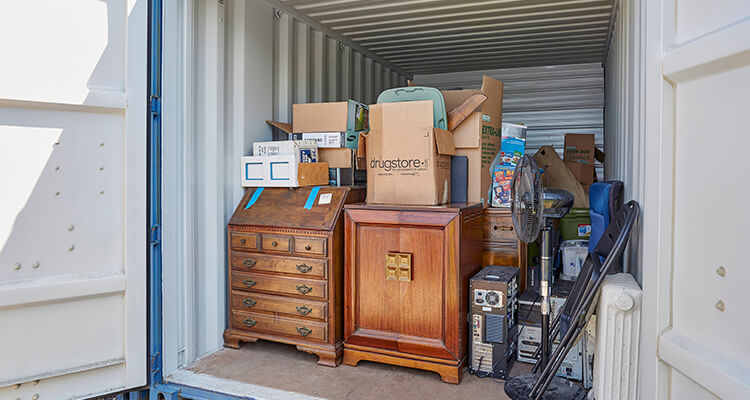
There’s a particular kind of clarity that comes when you’re standing in a half-empty room, looking at everything you own stacked against one wall. A move forces you to reckon with what you’ve accumulated, what you actually need, and what you’ve been holding onto out of habit rather than intention. Packing a storage container is, in some ways, the most honest part of moving. Everything has to earn its place.
That said, sentiment alone won’t get your grandmother’s dresser across the state without a scratch. How you load a container determines whether your belongings arrive the way you left them or in a condition that requires apologies to yourself. Most damage during a container move isn’t caused by rough roads. It comes from poor weight distribution, gaps that allow shifting, and items that weren’t wrapped before they were stacked.
The Best of Utah Moving team has detailed how this process works when it’s done right, and the principles hold whether you’re packing a 16-foot container or a small portable unit. Load heavy items first, keep weight evenly distributed from side to side, fill gaps so nothing shifts in transit, and use straps at regular intervals as you build toward the door. The rest is execution.
Start With What You’re Not Starting With
Before anything goes into a container, certain items shouldn’t be going in at all. Hazardous household materials, including flammable liquids, paint, propane, and pesticides, are not safe for container transport. The U.S. Environmental Protection Agency provides clear guidance on what qualifies as hazardous household waste and how to dispose of it properly before a move. Sorting these items out early removes a category of risk entirely.
Irreplaceable items deserve the same consideration. Important documents, jewelry, and anything that can’t be replaced if lost should travel with you, not in the container. A container is secure, but it’s not a vault. The distinction matters.
Build From the Bottom, Not the Back
The instinct for most people is to start at the back of the container and work toward the door. The better approach is to start from the floor and think in layers.
Heaviest items go down first: large furniture, appliances, and dense boxes. Spread them across the width of the container so no single side carries more weight than the other. Imbalance in a moving container is what causes the most damage over long distances, particularly when the container shifts on curves or during loading and unloading.
Dressers, wardrobes, and bookcases can often stand upright along the walls. Disassemble what can be disassembled. Bed frames, in particular, pack far more efficiently in pieces than they do whole, and the hardware stays with the frame in a clearly labeled bag taped directly to the furniture.
Wrap Before You Stack, Not After
This sounds obvious until you’re three hours into packing and you start trusting that one item will protect another. It won’t. Furniture without moving blankets scratches against box corners. Glass without wrapping breaks against furniture edges. Every item that touches another item needs something between them.
Moving blankets are worth owning for a single move. Bubble wrap handles fragile items. Packing paper fills dead space inside boxes so nothing rattles. None of this is expensive relative to what it protects.
Mattresses need bags, not just blankets. A mattress that collects dust or moisture inside a container is one of the harder things to recover from once you arrive.
Fill the Gaps With Purpose
Empty space is the enemy inside a container. Pillows, cushions, rolled blankets, and soft bags all serve double duty as both packed items and gap fillers. The goal isn’t just to maximize space. It’s to create a tight enough pack that nothing can build momentum and shift.
Once you’ve built a section, run a strap across it before moving to the next. Containers have anchor points along the walls for exactly this reason. Strapping in sections as you go prevents the whole load from compressing toward the door if the container tilts during transport.
The Last Section Is the Most Overlooked
Most people pack the first two-thirds of a container carefully and then rush the last portion because they’re tired. This is the section that opens first on delivery day, and it’s the section most likely to topple when the doors swing open.
Pack the final section as firmly as the first. A large flat item, a mattress standing on its side, or a sheet of reinforced cardboard used as a barrier between the last section and the doors helps absorb any movement from the door opening. The Federal Motor Carrier Safety Administration recommends documenting your load with photos before sealing, which also gives you a record of condition if anything is disputed later.
What You Carry Out Is What You’ll Carry In
A well-packed container doesn’t just protect things in transit. It makes unpacking faster, less frustrating, and more considered. Label every box on the side, not the top, so you can read it when boxes are stacked. Group by room. Keep a written inventory of what’s in each section.
Moving is one of those experiences that reveals, quietly and without ceremony, how much of life is physical. How you treat what you own during a move says something about how you intend to inhabit the next place. Packing carefully is, in its own modest way, a form of respect for both.