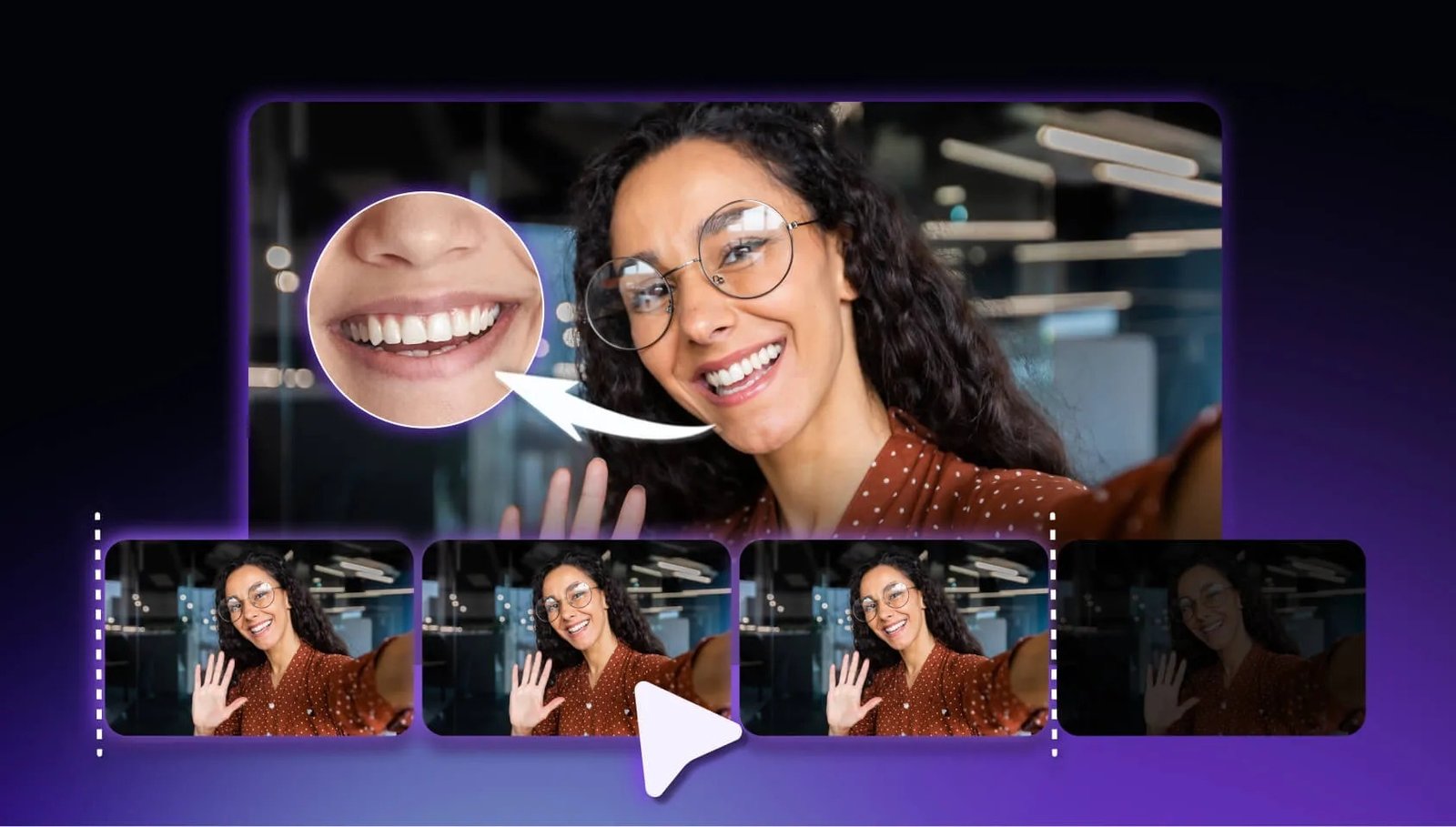
Lip syncing used to be one of the most painstaking parts of video production, a frame-by-frame exercise that demanded professional editing software and hours of tedious work. In 2026, AI has completely changed that reality. Whether you are dubbing footage for a global audience, animating a photo to speak, or creating scroll-stopping content without ever picking up a camera, you can now produce professional-quality lip sync results in minutes, directly from your browser.
This guide covers the best lip sync video maker online options available right now. We tested each tool across real-footage workflows, avatar-based content, and developer use cases to give you an honest, up-to-date comparison, so you can find the right fit for your specific needs without wasting time or money on the wrong platform.
At a Glance: Best Lip Sync Video Makers Online in 2026
| Tool | Best For | Free Plan | Starting Price | Watermark-Free | API |
| Magic Hour | Real footage lip sync + full workflow | Yes (400 credits) | $10/mo (annual) | Yes, even on free plan | Yes |
| HeyGen | Avatar videos & multilingual dubbing | Yes (3 videos/mo) | $29/mo | Paid plans only | Yes |
| Sync.so | Developer API integrations | Yes ($5 Hobbyist) | $5/mo | Creator plan ($19+) | Yes |
| Hedra | Talking photos & image animation | Yes (300 credits/mo) | $8/mo | Lite plan ($8+) | Yes |
| Higgsfield | Multi-model creative studio | Yes (10 credits/day) | $9/mo | Basic plan ($9+) | Yes |
| D-ID | Enterprise avatar deployment | 14-day trial | $5.90/mo | Paid plans | Yes |
1. Magic Hour: Best Overall Lip Sync Video Maker Online
If you are looking for the best AI video generator free to try with no credit card required, or the most capable lip sync video maker online for real production work, Magic Hour is the clear top choice in 2026.
Magic Hour is a browser-based AI video creation platform that combines lip sync, face swap, talking photo, text-to-video, image-to-video, and dozens of other tools into a single, unified workflow. Trusted by teams at Meta, NBA, L’Oreal, Puma, Cisco, and Shopify, it is the platform that professional creators and marketing teams reach for when quality and reliability actually matter.
What makes Magic Hour stand out from every other tool on this list is its architecture: the lip sync engine is built specifically for real recorded footage, not just synthetic avatars. That means you can take an existing video of a real person speaking, replace the audio with a new voiceover or translated track, and receive accurate, natural-looking lip sync across every single frame. That is a technically harder problem than avatar animation, and most competitors stumble on it. Magic Hour consistently does not.
The face swap and lip sync combination workflow is a production game-changer. Instead of recording new footage, teams can swap in a new face and sync new audio in one seamless pipeline, turning what used to be a multi-day shoot into a single session.
Beyond lip sync, Magic Hour gives you access to frontier AI models, one-click multi-step workflows (generate → upscale → video), click-to-create templates, fast variations and multiple takes, parallel generations with no concurrency cap on Business, and weekly feature releases that keep the platform ahead of the field. Performance is equally reliable under pressure, the platform handles live activations and traffic spikes without degradation.
Key Strengths:
- Best-in-class real footage lip sync — accurate on dialogue, accents, and pacing variations
- Face swap + lip sync in one workflow, no tool-switching required
- No signup needed to try; 400 free credits with no watermark and no credit card required
- Credits never expire — unused credits roll over indefinitely
- Works on any device from a browser — no download, no GPU required
- Full API parity across all tools; optimized for both desktop and mobile
- Founder-level support responsiveness; paid subscribers get priority responses within 3 hours
- Many top AI models in one place, with a model leaderboard for transparency
Limitations:
- Lip sync quality can degrade on extreme head angles beyond 70–80 degrees
- Not suited for stylized or non-human animation — built for realistic human faces
Pricing (verified June 2026):
- Free: 400 credits, watermark-free exports, no credit card required
- Creator: $15/mo monthly, or $10/mo billed annually ($120/year) — 120,000 credits/year, 1024px, commercial use, full API
- Pro: $39/mo monthly, or $25/mo billed annually ($300/year) — 300,000 credits/year, 1472px, 5 concurrent generations
- Business: $99/mo monthly, or $66/mo billed annually ($792/year) — 840,000 credits/year, 4K, unlimited concurrent generations, full API
Best for: Creators, marketers, and production teams doing real footage lip sync, video dubbing, or combined face swap + lip sync workflows. The free tier is the most generous on this list, no other major platform offers 400 watermark-free credits without asking for a credit card.
2. HeyGen: Best for Avatar Videos and Multilingual Dubbing
HeyGen is the leading platform for avatar-based video creation. Its core strength is multilingual support: with 175+ languages and a library of 700+ stock avatars, it is the tool of choice for global marketing teams and corporate communications teams that need localized video content at volume.
The platform lets you translate an existing video into a new language with lip movements matched to the translated audio — a workflow it handles better than almost any competitor. Custom avatar creation from your own footage is also available.
The tradeoff is that HeyGen is built for avatar workflows, not real footage. Its free plan is evaluation-only: 3 videos per month, watermarked, capped at 720p.
Pricing:
- Free: 3 videos/month, watermarked
- Creator: $29/mo (or $24/mo annual) — unlimited videos, 1080p, watermark-free
- Business: $89/mo ($72/mo annual) — 4K, team workspace, API
Best for: Corporate marketing, e-learning, and global brands needing multilingual avatar video at scale.
3. Sync.so: Best API-First Lip Sync for Developers
Sync.so (by Synchronicity Labs) is not a content creation platform — it is a lip sync engine built for developers integrating lip sync directly into products and automated pipelines. Its Lipsync-2 model supports up to 4K resolution, voice cloning, active speaker detection, and batch processing, with a REST API and SDKs designed for scale.
The usage-based pricing — a monthly subscription plus per-second charges — is the most honest and predictable cost model for high-volume API work. The Lipsync Studio provides a no-code interface for creators who want the model quality without writing code.
Pricing:
- Hobbyist: $5/mo + $0.05/sec — watermarked, 1 concurrent job
- Creator: $19/mo + $0.05/sec — watermark-free, voice cloning
- Growth: $49/mo + $0.0475/sec — 6 concurrent jobs
- Scale: $249/mo + $0.04/sec — batch API, 15 concurrent jobs
Best for: Developers and product teams building lip sync into applications or automated video pipelines.
4. Hedra: Best for Talking Photos and Image Animation
Hedra’s Character-3 model is the current benchmark for talking photo animation — taking any still image and generating a video where the subject speaks, with synchronized lip movements, facial expressions, and head motion. Unlike avatar platforms that restrict you to a pre-built library, Hedra animates any photo you upload: a real person, an illustrated character, a brand mascot.
Voice cloning is available on the Creator plan and above. The maximum output resolution is 720p across all current plans, which is a meaningful limitation for high-production use.
Pricing:
- Free: 300 credits/month, watermarked, no commercial use
- Lite: $8/mo — commercial use, watermark-free
- Creator: $24/mo — voice cloning, 4,000 credits
- Professional: $60/mo — 12,000 credits, priority generation
Best for: Creators animating specific faces or characters from photos, and brands building spokesperson content without filming.
5. Higgsfield: Best Multi-Model Creative Studio with Native Lip Sync
Higgsfield aggregates access to Sora 2, Veo 3.1, Kling 3.0, and WAN 2.6 under a single subscription, with a native Lipsync Studio built into the same workflow as video generation. For creators who want multiple top-tier video generation models and lip sync without managing separate subscriptions, it is the most comprehensive single-platform option.
Features like Cinema Studio (cinematic camera presets), Soul ID (consistent character identity across shots), and 70+ VFX templates give it creative depth that simpler tools cannot match — but premium models burn credits fast, and the free tier (10 credits/day) is barely enough for meaningful testing.
Pricing:
- Free: 10 credits/day
- Basic: $9/mo — 150 credits
- Pro: $29/mo — 600 credits, all models including Sora 2 and Veo 3.1
- Ultimate: $49/mo
- Creator: $119/mo — 6,000 credits
Best for: Content creators and social media producers who want multi-model access and built-in lip sync in one workspace.
6. D-ID: Best for Enterprise Avatar Deployment at Scale
D-ID is one of the longest-established platforms in AI avatar video, now on its V4 model architecture with sub-0.5-second latency for real-time conversational avatar use cases. It supports 119 languages and is backed by SOC 2 compliance, SSO, and dedicated enterprise support — making it a defensible choice for large organizations with strict data handling requirements.
The $5.90/mo Lite plan is the lowest entry price on this list, though features like custom avatars, voice cloning, and SLA are locked to higher tiers. The free access is a 14-day trial only — there is no ongoing free plan.
Pricing:
- Free Trial: 14 days, watermarked
- Lite: From $5.90/mo
- Pro/Advanced: Higher tiers with premium presenters and voice cloning
- Enterprise: Custom — SSO, SLA, unlimited volume
Best for: Enterprise teams needing compliant multilingual avatar video and developers building real-time conversational AI agents.
How We Choose These Tools
Every tool on this list was evaluated against the same set of criteria — the factors that actually determine whether a lip sync tool works in real production versus just looking impressive in a demo.
Lip sync accuracy on real footage. We tested each tool on actual recorded video clips, not just avatar animations. Phoneme accuracy on difficult sounds (plosives, fricatives), performance across accents, and frame-level stability under different lighting conditions were all assessed.
Stability on longer clips. Many tools perform well on 5–10 second clips but drift out of sync or introduce artifacts on 60-second-plus clips. We specifically tested longer-form content where these issues become visible.
Free tier honesty. We verified what the free plan actually delivers versus what the marketing suggests — including whether outputs are watermarked, whether commercial use is permitted, and whether a credit card is required to start.
Pricing transparency and value. We checked every pricing page directly and verified monthly vs. annual rates, credit amounts, resolution caps, and what features are genuinely locked behind paid tiers.
Workflow integration. A great lip sync engine is more valuable when it fits into a broader creation workflow without requiring tool-switching. Tools that handle multiple steps — face swap, upscaling, audio replacement — in one place were weighted accordingly.
Reliability at scale. For platforms positioned for professional or enterprise use, we considered performance under high-load conditions, API consistency, and the quality of support responses.
Frequently Asked Questions
What is the best free lip sync video maker online?
Magic Hour offers the most generous free plan of any tool on this list: 400 credits, watermark-free exports, and no credit card required. You can try the full lip sync tool without signing up. Hedra offers 300 free credits per month but watermarks outputs and restricts commercial use to paid plans. HeyGen’s free plan is limited to 3 videos per month with watermarks — effectively evaluation-only.
Can AI lip sync tools work on videos where the person is moving?
Yes, with caveats. Modern tools track face position across frames, so moderate head movement is handled well. Quality decreases significantly on full-profile shots past roughly 80 degrees, fast jerky movement, or frames where hands pass in front of the face. The practical fix is to trim those problem frames from your source clip before processing, or to select footage with steadier camera work.
What is the difference between lip sync and video dubbing?
Lip sync is the technical process of matching mouth movements to audio. Video dubbing is the broader localization workflow — translating the script, generating or recording new audio in the target language, and then applying lip sync to match the translated audio. Tools like HeyGen and D-ID offer full dubbing pipelines including translation. Magic Hour and Sync.so focus on the lip sync layer, which you pair with translated audio from any source you choose.
Do I need to download software to use these tools?
No. All six tools on this list are browser-based and require no download or local GPU. Magic Hour is fully optimized for both desktop and mobile browsers, so you can create and review content from any device.
Are AI-generated lip sync videos legal to use commercially?
Applying lip sync to content you own or have properly licensed is legal for commercial use on paid plans across all tools listed here. The legal issues arise when lip sync is applied to real people without their consent — particularly to make them appear to say things they did not say. All platforms on this list prohibit this in their terms of service, and laws covering non-consensual synthetic media are expanding in most jurisdictions. Always ensure you have consent from anyone whose likeness is being modified.
Do unused credits expire on Magic Hour?
No. Magic Hour credits never expire — unused credits roll over indefinitely, so you keep everything you have earned or purchased regardless of how long it takes you to use them.
Which tool is best for a developer building lip sync into a product?
Sync.so is purpose-built for this use case, with a clean REST API, SDKs, batch processing, and per-second billing that makes costs predictable at scale. Magic Hour also offers full API parity across all its tools, which is the better choice if you need lip sync as part of a broader AI video pipeline rather than a standalone service.
Conclusion
The best lip sync video maker online for most creators in 2026 is Magic Hour. Its combination of a genuinely free tier (no watermark, no credit card, 400 credits), best-in-class real footage lip sync, a full suite of AI video and image tools in one platform, and transparent pricing starting at $10/month makes it the standout choice across skill levels and budgets.
For specialized use cases — avatar-based corporate video, API-first developer pipelines, or enterprise-scale localization — HeyGen, Sync.so, and D-ID are strong alternatives that lead in their respective categories.
Regardless of which platform you start with, the barrier to creating professional lip sync video content has never been lower. The best time to experiment is now.