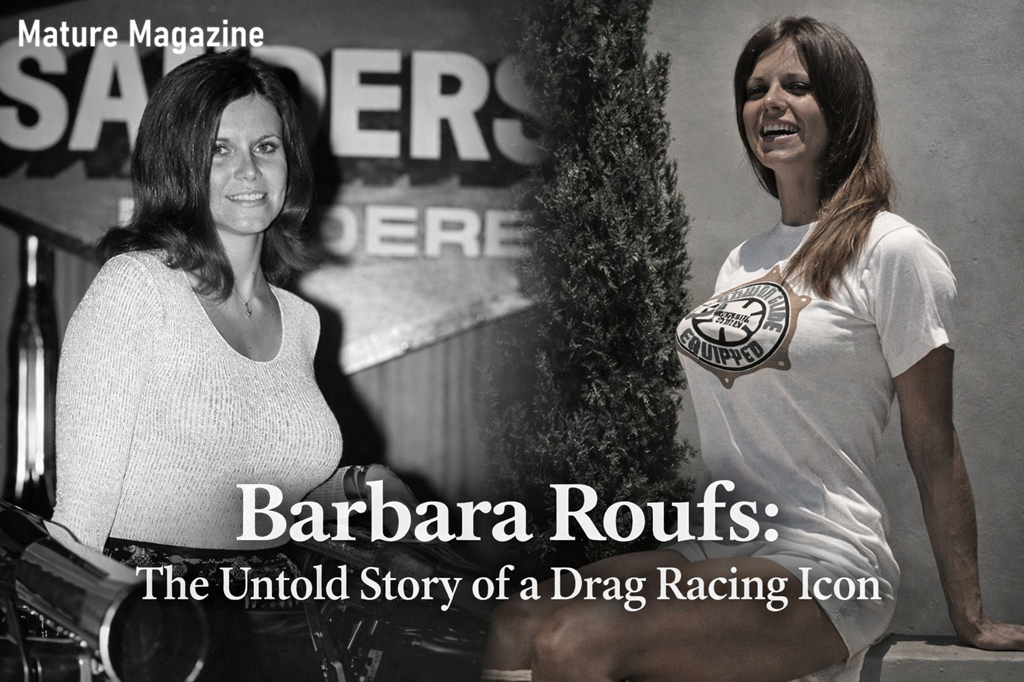
Barbara Roufs holds a special place in the history of American drag racing. People remember her not because she drove cars or won races, but because she brought life, charm, and personality to a fast growing sport. Her story feels powerful because it mixes success, beauty, culture, and a quiet emotional truth that many people only learned later.
This article explains her life in a clear and human way. It helps you understand who she was, what she achieved, and why her story still matters today
Barbara Roufs Quick Biography
| Field | Details |
|---|---|
| Full Name | Barbara Roufs |
| Birth Year | 1944 |
| Birthplace | California, United States |
| Nationality | American |
| Profession | Trophy Girl, Model |
| Known For | Drag Racing Culture in the 1970s |
| Active Years | Late 1960s to 1970s |
| Famous Role | Drag Racing Trophy Girl |
| Child | Jet Dougherty |
| Marital Status | Married |
| Death | January 1991 |
| Age at Death | 47 years |
| Legacy | Icon of 1970s drag racing culture |
Who Was Barbara Roufs?
Barbara Roufs was an American trophy girl and model who became famous during the late 1960s and early 1970s. She became well known in the drag racing scene, especially in Southern California, where the sport was growing quickly.
A trophy girl had an important role at racing events. She presented awards, stood beside winning drivers, and helped create excitement among fans. While this role might seem simple, it required strong confidence, communication skills, and the ability to connect with large crowds.
Barbara Roufs did all of this naturally. She stood out from others because of her strong personality and warm presence.
Early Life and Background
Barbara Roufs was born in 1944 in California, a state known for its strong connection to car culture and motorsports. Growing up in this environment played a key role in shaping her future.
Her family had a deep interest in racing. Her father loved motorcycles and often took part in racing activities. This early exposure made Barbara comfortable around engines, tracks, and the fast pace of racing life.
At the same time, her home life remained simple and supportive. She grew up in a caring family where she learned confidence and kindness. These qualities later became part of her public image.
Living in California also gave her access to some of the most active racing communities in the United States. This made it easier for her to step into the world that would later bring her fame.
Entry Into Drag Racing
Barbara Roufs did not follow a planned path into fame. Instead, she entered drag racing in a natural way, influenced by her surroundings and family background.
In the late 1960s, she began working as a trophy girl at drag racing events. These events were becoming larger and more popular, drawing big crowds and media attention.
From the beginning, she stood out. She did not just perform her role, she connected with the audience. She smiled, interacted, and made people feel part of the event.
Her confidence helped her become one of the most recognized faces at racing tracks.
Rise to Fame in the 1970s
The 1970s marked the peak of her popularity. During this time, drag racing became a major part of youth culture in America. Music, fashion, and cars all came together to create a unique atmosphere.
Barbara Roufs became a symbol of this era. She appeared at major racing venues such as the Orange County International Raceway. Fans began to recognize her and look forward to seeing her at events.
Her fame grew because of several factors:
- She had a natural and confident presence
- She looked unique and stylish for her time
- She connected easily with fans
- She brought energy to every event
She also earned titles such as racing queen at major competitions. These titles showed how respected and admired she had become.
Unlike many others, she entered the spotlight at a slightly older age, which made her confidence even more noticeable.
Style and Cultural Influence
Barbara Roufs became more than a trophy girl. She became a symbol of a changing culture.
Her style reflected the spirit of the 1970s. She wore bold outfits, long flowing hair, and confident expressions. Her look matched the energy of a time when people started to express themselves more freely.
She helped shape how women were seen in motorsports. Before her, women had very limited roles in racing events. She showed that women could be a strong and visible part of the experience.
Her presence added personality to the sport. She made events feel more exciting and welcoming.
Today, many people still see her as an icon of that era. Her photos continue to represent the look and feeling of 1970s drag racing.
Personal Life and Family
While Barbara Roufs lived in the public eye, she kept her personal life private.
She was married and had a daughter named Jet. Those close to her describe her as a caring and loving mother. She valued her family and spent time away from the spotlight focusing on her home life.
This balance between public fame and private life shows a deeper side of her personality. She was not only a public figure but also a person with strong family values.
Her decision to keep her personal life quiet also adds a sense of mystery to her story.
Life After Fame
After her time at the peak of drag racing culture, Barbara Roufs slowly stepped away from public attention.
She did not try to stay in the media or move into acting or television. Instead, she chose a quieter and more private life.
There is limited information about her later years. This lack of detail has made many people curious about what happened after her fame faded.
However, it also suggests that she preferred peace and privacy over continued attention.
A Tragic Ending
Barbara Roufs passed away in January 1991 at the age of 47.
Reports indicate that her death was a suicide. This news shocked many people who remembered her as a joyful and confident figure.
The reasons behind her struggles were never publicly shared. Her family chose to keep those details private.
Her story reminds us of an important truth. A person can appear strong and happy on the outside while facing challenges inside.
This part of her life adds emotional depth to her story and makes it more human.
Rediscovery in Modern Times
Years after her passing, Barbara Roufs gained attention again through the internet.
Old photographs of her began to circulate online. These images introduced her to a new generation that had never seen her before.
Photographer Tom West played a key role in this rediscovery by sharing classic photos from racing events.
As people saw these images, they became curious about her life. Searches for her name increased, and her story reached audiences around the world.
This shows how powerful visual history can be in keeping memories alive.
Legacy and Lasting Impact
Barbara Roufs left a lasting mark on both motorsports and popular culture.
She helped shape the role of trophy girls and made it more meaningful. Her presence added excitement and personality to racing events.
More importantly, she helped open the door for women to have a visible role in a male dominated sport.
Her legacy includes:
- Being a symbol of 1970s drag racing culture
- Influencing the image of women in motorsports
- Leaving behind a strong visual history through photographs
Even today, fans remember her and continue to share her story.
Why Her Story Still Matters
People continue to search for Barbara Roufs because her story feels real and relatable.
She experienced success and admiration, but she also faced challenges that many people can understand.
Her life teaches us that fame does not always bring happiness. It also reminds us to look beyond appearances and understand people more deeply.
Her story connects with readers because it shows both strength and vulnerability.
Read More👉 Barbara Boothe Biography: Family, Marriage, and Life Story
Final Thoughts
Barbara Roufs lived a life that combined beauty, confidence, and emotional depth.
She brought energy and charm to drag racing during one of its most exciting periods. At the same time, her personal story reminds us that every person has a deeper side that the world may not see.
Her legacy continues through photos, memories, and the curiosity of people who want to learn more about her life.
Even today, her story encourages us to appreciate not only public success but also the human experience behind it.