When a commercial aircraft turns back shortly after takeoff, it often raises immediate concern. In most cases, however, such returns reflect caution, not danger.
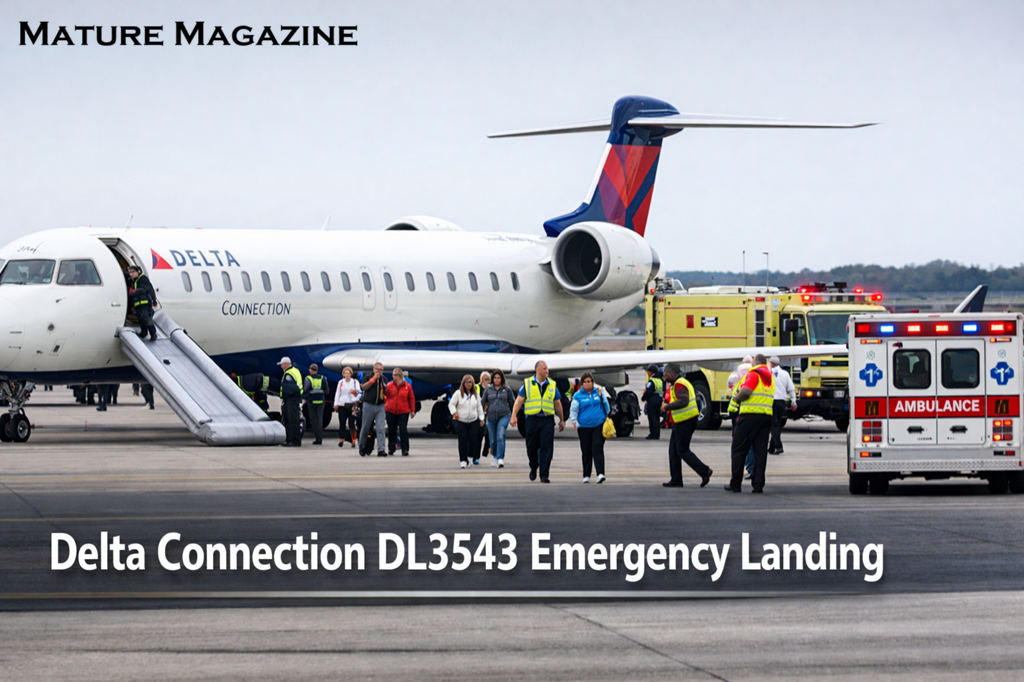
On July 7, 2025, Delta Connection flight DL3543 returned safely to Minneapolis-St. Paul International Airport after the flight crew identified a pressurization-related indication during the climb. The aircraft landed normally, emergency services were positioned as a precaution, and all passengers remained safe.
This article explains the Delta Connection DL3543 emergency landing, what triggered the return, how airline safety protocols guided each decision, and why modern aviation systems protect passengers before risk escalates.
Timeline of the DL3543 Incident
Departure and Intended Route
The regional jet departed Minneapolis with a scheduled destination that varied in early reports, including Toronto Pearson and Chicago. What matters operationally is not the destination but the timing. The event occurred shortly after departure, during the initial climb phase.
Emergency Declaration
Flight tracking data and aviation reporting confirm the crew transmitted an emergency signal, commonly referred to as Squawk 7700. This signal alerts air traffic control that the aircraft requires immediate priority.
Return and Landing
Instead of continuing the flight, the aircraft returned to Minneapolis. Emergency services were positioned as a precaution. The landing was controlled, planned, and uneventful.
Passenger Outcome
Passengers disembarked safely. Video footage later showed cabin crew and ground staff assisting travelers, including the use of emergency exits as part of standard safety procedures. No injuries were confirmed.
Why Pressurization Alerts are Taken Seriously
Aircraft cabin pressurization systems regulate internal air pressure as altitude increases. Even a suspected cabin pressure issue triggers conservative decision making.
Importantly, a pressurization alert does not automatically mean the cabin lost pressure. It often indicates:
- A sensor reading outside expected limits
- A system needing verification
- A precautionary warning during climb
Pilots are trained to treat these signals with respect. Continuing the flight introduces uncertainty. Returning early removes it.
What Declaring an Emergency Actually Means
The word emergency can sound alarming. In aviation, it is a procedural tool, not a measure of panic.
Declaring an emergency allows the crew to:
- Receive immediate landing clearance
- Reduce radio congestion
- Coordinate emergency response services
- Focus solely on aircraft handling
Most emergency landings are precautionary returns, not crisis situations. DL3543 fits this exact category.
Why Returning to Minneapolis Was the Best Option
Returning to the departure airport is often the safest choice, especially soon after takeoff.
Minneapolis offered:
- Certified maintenance teams on standby
- Familiar runways and operating conditions
- Full airport emergency readiness
- Faster passenger support and rebooking
This decision reduced complexity and allowed the issue to be addressed quickly and professionally.
Who Operated Delta Connection DL3543
Although the flight carried a Delta flight number, it was operated by Endeavor Air, a wholly owned subsidiary of Delta Air Lines.
This distinction often appears in headlines, yet from a safety standpoint, it changes nothing.
Delta Connection operations follow:
- Federal Aviation Administration regulations
- Identical safety oversight
- Standardized pilot training
- Unified operational procedures
For passengers, the safety framework is the same.
Passenger Experience Inside the Cabin
For travelers on board, the experience likely felt calm but unexpected.
Common elements in similar situations include:
- Clear and steady crew communication
- A shorter flight than planned
- A controlled descent back to the airport
- Emergency vehicles visible after landing
- A brief pause while inspections begin
Crews rehearse these scenarios regularly. Their goal is reassurance through structure and professionalism.
What Happens to the Aircraft After Landing
Once the aircraft returned:
- It was removed from active service
- Maintenance teams inspected the pressurization system
- Any fault was confirmed or ruled out
- The aircraft would only return to service after clearance
Passengers were typically rebooked according to airline policies for safety related disruptions. Schedule never outweighs safety.
Addressing Confusion With Other Delta Incidents
Some early coverage referenced other Delta related events around the same time, including a separate lithium ion battery fire on a different flight.
These incidents were unrelated. Aviation reporting sometimes groups events by date, which can create confusion. Confirmed sources consistently link DL3543 to a pressurization related precautionary return, not a cabin fire.
Why this Incident Should Reassure Travelers
It is easy to read this story as something going wrong. In reality, it shows aviation systems working exactly as intended.
- A potential issue was identified early
- The crew chose caution over convenience
- Procedures were followed precisely
- Passengers were protected
- The aircraft landed safely
This approach is why commercial aviation remains one of the safest forms of transportation worldwide.
The Bigger Safety Culture Behind the Scenes
Modern aviation prioritizes prevention over reaction. Pilots are encouraged to land first and investigate later. Airlines reward conservative decisions. Regulators require layered safeguards.
Most of this happens quietly. Occasionally, as with DL3543, it becomes visible.
Final Thoughts
The Delta Connection DL3543 emergency landing was not a failure of aircraft systems or crew judgment. It was the result of early detection, conservative decision making, and structured safety training working together exactly as intended.
Modern aviation does not wait for problems to escalate. It responds at the first sign of uncertainty. Pilots are trained to prioritize landing over continuation, verification over assumption, and passenger safety over schedule.
Understanding this process transforms fear into confidence. It shows that when something does not look right in the air, the safest response is to return, inspect, and protect everyone on board. That quiet commitment is why commercial flying remains one of the safest ways to travel.
FAQs About Delta Connection DL3543 Emergency Landing
What Caused the Delta Connection DL3543 Emergency Landing?
The flight returned due to a pressurization-related indication detected shortly after takeoff. The crew acted as a precaution and followed standard safety procedures.
Was Anyone Injured During the DL3543 Incident?
No. The aircraft landed safely, and no injuries were reported.
Did the Aircraft Lose Cabin Pressure?
There is no confirmed evidence of a full cabin pressure loss. The return was linked to an alert that required verification on the ground.
Why Do Pilots Declare Emergencies for Precautionary Issues?
Declaring an emergency ensures priority handling, clear communication, and immediate support. It allows crews to focus fully on safe aircraft operation.
Are Delta Connection Flights as Safe as Mainline Delta Flights?
Yes. Delta Connection flights operate under the same federal regulations, safety oversight, and training standards as mainline operations.
Why Were Emergency Vehicles Visible After Landing?
Emergency services automatically respond whenever an emergency is declared. Their presence is standard procedure, not an indication of danger.
Will the Exact Cause of the Alert be Publicly Released?
Not always. If the issue does not meet investigation thresholds, detailed public reports may not be issued.
Read beyond the headlines with Mature Magazine.
Our expert-led reporting turns aviation incidents into understanding.