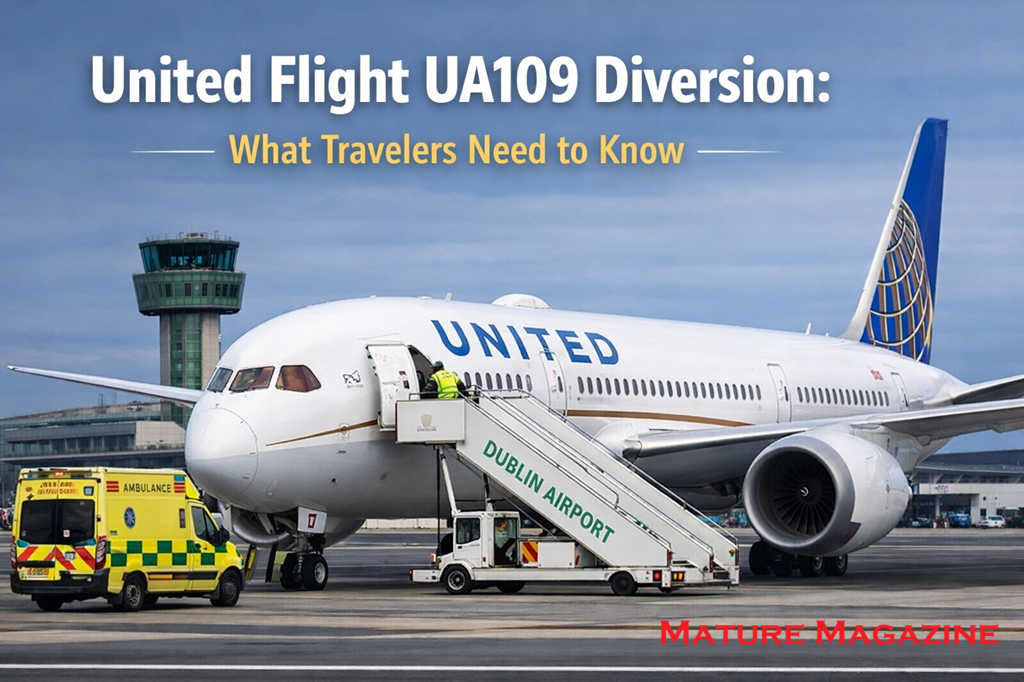
On October 30, 2025, a United Airlines transatlantic flight traveling from Munich to Washington Dulles diverted to Dublin after a cabin crew member became medically unable to continue the journey. The aircraft turned back over the Atlantic to ensure immediate medical care and to maintain required crew safety standards. The diversion was precautionary, safely executed, and unrelated to weather or mechanical issues.
Understanding the United Flight UA109 Diversion
The United Flight UA109 diversion was not caused by weather, aircraft malfunction, or air traffic issues. Instead, it resulted from a medical emergency involving a cabin crew member, which made it unsafe to continue a long haul transatlantic flight.
In commercial aviation, crew readiness is essential. When a crew member cannot perform required safety duties, regulations require the flight to divert.
That principle guided every decision made on UA109.
The Original Flight and Aircraft
United Flight UA109 was operating a scheduled international service for United Airlines.
Planned journey
- Departure airport: Munich Airport
- Arrival airport: Washington Dulles International Airport
- Aircraft type: Boeing 787-9 Dreamliner
The Boeing 787-9 is designed for long distance international routes and was operating normally before the incident.
What Happened During the Flight
After departing Munich, the aircraft entered cruise while crossing the Atlantic Ocean. During this phase, a cabin crew member reported severe pain caused by a medical condition (a blister), which made them unable to continue working for the remainder of the approximately seven hour flight.
Cabin crew members play a critical role in flight safety. They manage emergencies, assist passengers, and coordinate evacuations if needed. When one becomes medically unfit, continuing a long haul flight is no longer permitted.
As a result, the flight crew initiated diversion procedures.
Why the Aircraft Turned Back Over the Atlantic
The decision to turn back was made over the Atlantic, well before reaching North America. This early action reduced operational risk and ensured faster access to medical care.
The aircraft diverted to Dublin Airport, one of the most commonly used transatlantic diversion airports.
Dublin was selected because it offers:
- Immediate access to advanced medical facilities
- Long runways suitable for wide body aircraft
- Full international airline support services
- Proven experience handling North Atlantic diversions
The diversion was conducted calmly and safely.
What Happened After Landing in Dublin
Upon landing, airport medical teams met the aircraft. The affected crew member received immediate medical assistance and was removed from duty.
There were no injuries reported among passengers, and no aircraft related issues were identified. Ground handling and passenger support followed standard international procedures.
The situation remained controlled from start to finish.
Why Crew Medical Emergencies Require Diversions
Aviation safety rules apply to people as strictly as they do to aircraft systems.
Cabin crew members are required to:
- Respond to onboard medical events
- Manage cabin safety during turbulence
- Coordinate emergency evacuations
- Assist passengers during unexpected situations
If these responsibilities cannot be fully performed, the safest and only acceptable option is to divert. This is a regulatory requirement, not a discretionary choice.
Passenger Impact and Airline Responsibility
Diversions can be inconvenient, but they exist to prevent greater risk later.
In events like the United Flight UA109 diversion:
- Safety takes priority over schedules
- Airlines act conservatively by design
- Passenger protection guides every decision
Although travel plans may be disrupted, these actions protect everyone onboard.
Distinguishing Facts From Interpretation
Confirmed facts
- The diversion occurred on October 30, 2025
- The route was Munich to Washington Dulles
- The diversion airport was Dublin
- The cause was a cabin crew medical emergency
- The aircraft landed safely
Contextual interpretation
- The early diversion reduced operational complexity
- Dublin offered the fastest access to medical care
- The response reflects strong safety culture
There is no evidence of mechanical failure or weather disruption.
Is United Flight UA109 Operating Normally Now?
Flight tracking data from FlightAware shows that United Flight UA109 is operating normally as of February 9, 2026.
The Munich to Washington Dulles service is currently on schedule and expected to arrive at Dulles at approximately 2:58 PM EST. This confirms that the October 2025 diversion was an isolated and precautionary event, not an ongoing operational concern.
What the United Flight UA109 Diversion Shows About Aviation Safety
This incident highlights how modern airline safety systems work in real time.
It shows that:
- Crew health is treated as critical to flight safety
- Diversions are made early rather than late
- Passenger risk is minimized through conservative choices
- Safety procedures function quietly and effectively
Rather than signaling failure, the diversion demonstrates aviation safety working exactly as intended.
Why This Incident Still Matters
Aviation incidents often appear alarming when stripped of context. This one deserves clarity.
The United Flight UA109 diversion was not a crisis. It was a measured, professional response to an unexpected medical situation involving a crew member.
For travelers, it reinforces a simple truth. When airlines divert flights, they do so to protect lives, not convenience.
Stay informed with calm, reliable reporting. Explore more aviation and global stories on Mature Magazine.