Introduction
Clear markings help people understand where to drive, walk, and park without second guessing. When lines fade or are placed poorly, visibility drops and confusion rises. This is a common concern in busy areas where traffic moves constantly and conditions change throughout the year. Line painting in Brampton plays a key role in keeping spaces readable and predictable. When it is done poorly or left to wear out, everyday movement becomes harder and safety risks increase for drivers, pedestrians, and property users alike.
Why visibility problems happen so often
Visibility issues usually develop slowly. Paint fades from sun exposure, tire wear, and seasonal weather. Snow removal and heavy rain also speed up wear. Over time, once clear lines become hard to see, especially at night or during bad weather.
In high traffic areas, even small visibility issues can cause hesitation. Drivers may slow suddenly, drift out of lanes, or park incorrectly. Pedestrians may step into active vehicle paths without realizing it. These problems often trace back to unclear or poorly maintained markings rather than driver behavior alone.
How faded lines affect driver awareness
Drivers rely heavily on ground markings to make quick decisions. Lane edges, stop lines, and directional arrows all communicate important information. When line painting in Brampton fades, drivers lose those cues.
At intersections, unclear stop lines can lead to vehicles stopping too far forward or too far back. In parking areas, faded lines cause uneven parking, blocked access routes, and tighter spacing between vehicles. These issues increase the chance of minor collisions and slow down traffic flow.
Pedestrian safety concerns linked to poor visibility
Pedestrians are especially vulnerable when markings are unclear. Crosswalks that are hard to see reduce driver awareness and put people at risk. In busy commercial and residential areas, people expect visual cues to signal where it is safe to cross.
Poor visibility forces pedestrians to guess. Some may cross wherever feels convenient rather than where it is intended. Clear markings help guide foot traffic and alert drivers at the same time. Without them, shared spaces become unpredictable and stressful.
The role of clear symbols and text on surfaces
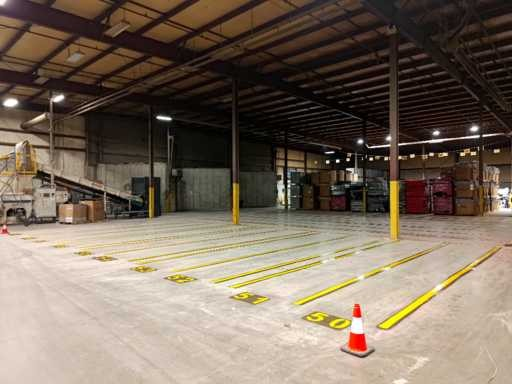
Painted symbols and words provide guidance beyond simple lines. This is where Stencil Markings in Ontario become important. Directional arrows, loading zone labels, and accessibility symbols all help people understand how a space should be used.
When these markings fade or are poorly applied, the message is lost. A faded loading zone label may lead to improper parking. An unclear accessibility symbol can make designated spaces harder to identify. Good visibility depends on both clear lines and readable surface markings working together.
Nighttime and low light visibility challenges
Visibility problems become more serious at night or in low light conditions. Headlights reflect differently on worn paint, making lines harder to detect. Rain can further reduce contrast between the road surface and markings.
Reflective signage painting in Ontario helps address this issue by improving how markings respond to light. When reflective elements are missing or worn out, drivers have less time to react. This can be especially dangerous near crossings, driveways, and areas with frequent turning movements.
Weather impact on line visibility
Brampton experiences a range of weather conditions that affect how markings hold up. Snow, ice, salt, and water all contribute to faster paint wear. Plowed snow can scrape markings away, while salt can dull their appearance.
When line painting in Brampton is not designed to withstand these conditions, visibility problems appear sooner than expected. Seasonal changes mean that markings need to remain clear in both bright summer light and dark winter evenings. Consistent visibility across seasons supports safer year round movement.
Confusion in shared use spaces
Shared use areas like parking lots, loading zones, and mixed traffic spaces depend heavily on visual guidance. Poor line quality creates confusion about right of way and intended movement.
Without clear guidance, drivers may cut across pedestrian paths or block access points. Pedestrians may walk in vehicle lanes. Stencil Markings in Ontario help clarify these spaces when they are visible and well placed. When they fade, the space loses structure and becomes harder to navigate.
How poor visibility affects long term behavior
Over time, people adapt to unclear markings in ways that are not always safe. Drivers may ignore faded lines and create informal paths. Pedestrians may cross wherever they feel comfortable. These habits make it harder to restore order later.
Clear reflective signage painting in Ontario helps reinforce proper behavior by making guidance obvious again. Strong visibility encourages people to follow intended routes and respect shared spaces. This improves consistency and reduces conflict between different users.
Helpful insights for maintaining clear visibility
Good visibility starts with understanding how spaces are used daily. High traffic areas need stronger visual cues. Pedestrian heavy zones need bold crossings. Parking and access routes need consistent spacing and alignment.
Line painting in Brampton works best when markings are refreshed before they become a problem. Waiting until lines disappear completely increases risk and confusion. Maintaining readable Stencil Markings in Ontario and effective reflective signage painting in Ontario helps keep spaces intuitive and safer for everyone.
Conclusion
Visibility is not just about appearance. It shapes how people move, react, and interact in shared spaces. Poor markings lead to hesitation, confusion, and unnecessary risk. Line painting in Brampton plays a direct role in preventing these issues by keeping guidance clear and easy to follow. When supported by readable Stencil Markings in Ontario and effective reflective signage painting in Ontario, spaces become safer and more predictable.
The key takeaway is simple. When people can clearly see where to go, they make better decisions. Clear markings support safer movement, smoother traffic flow, and a more organized environment for everyone who uses the space.