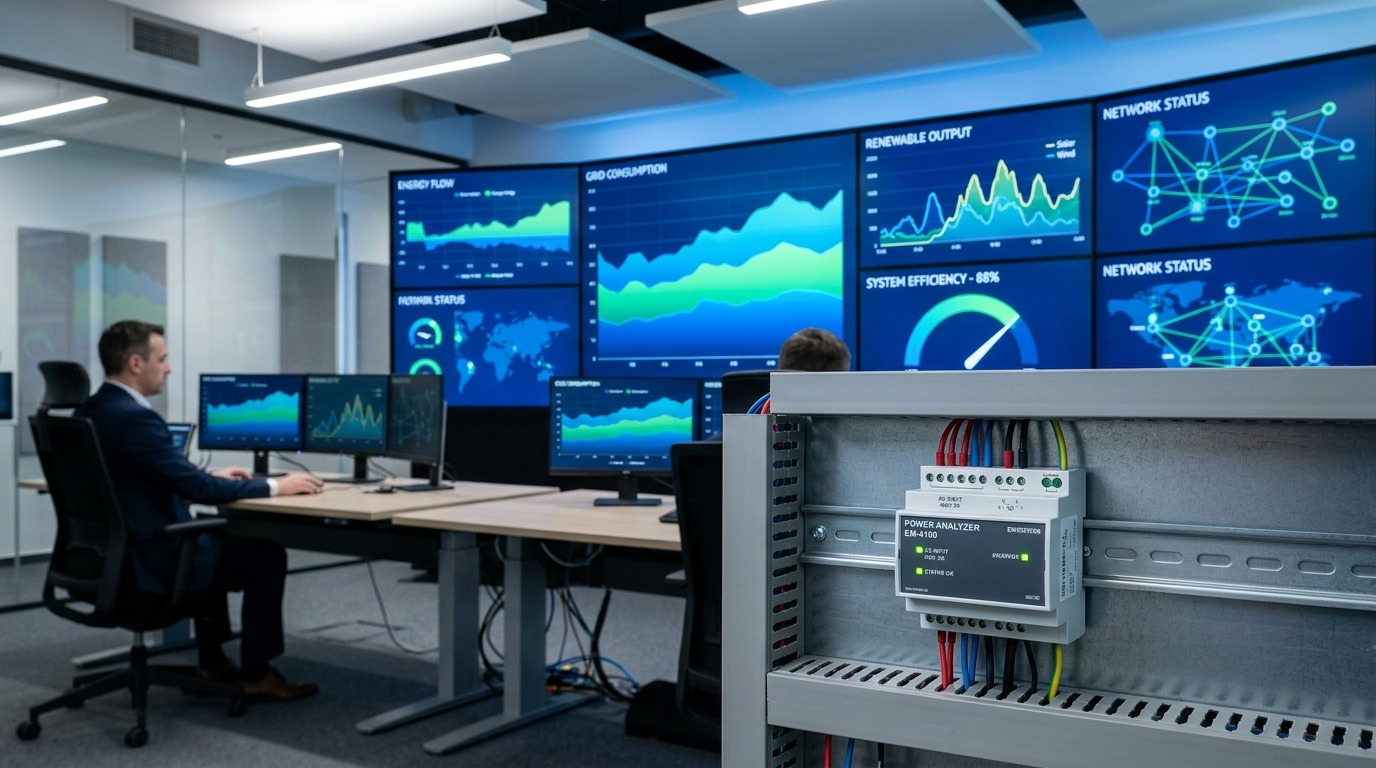
Energy monitoring has become a fundamental component of modern power infrastructure. As electrical networks grow more complex due to renewable integration, distributed assets, and increasing demand, effective energy monitoring ensures visibility, control, and operational efficiency. For utilities, industrial operators, and infrastructure managers, understanding the basic functions of energy monitoring systems is essential for maintaining reliable and resilient operations.
Energy monitoring systems are designed to collect, process, and analyze electrical parameters across different parts of the network. These systems provide actionable insights that help operators optimize performance, detect anomalies, and comply with regulatory requirements.
What Is Energy Monitoring?
Energy monitoring refers to the continuous measurement and analysis of electrical parameters such as voltage, current, power factor, frequency, and energy consumption. Through sensors, smart devices, and communication modules, data is collected from field equipment and transmitted to centralized platforms for evaluation.
Modern systems typically include:
- Real-time data acquisition from meters, RTUs, and protection devices
- Centralized visualization through cloud-based or on-premise platforms
This structured data flow allows operators to make informed decisions based on accurate and up-to-date information.
Core Functions of Energy Monitoring Systems
The primary objective of energy monitoring is to provide transparency across the electrical network. However, its functionality extends beyond simple data collection.
Key functions include:
- Real-Time Measurement
Continuous monitoring of voltage levels, current loads, and power quality indicators helps detect irregularities before they escalate into failures. - Event and Alarm Management
When thresholds are exceeded, the system generates automatic alerts, enabling rapid response and minimizing downtime. - Historical Data Logging
Energy monitoring platforms store historical data for trend analysis, reporting, and compliance documentation. - Performance Optimization
By analyzing consumption patterns and load distribution, operators can improve operational efficiency and reduce energy losses.
Integration with Digital Infrastructure
Energy monitoring plays a critical role in digital transformation within the energy sector. It integrates seamlessly with substation automation systems, grid control platforms, and renewable energy management solutions.
Through secure communication protocols, monitoring systems consolidate data from multiple sources into a unified interface. This enables centralized supervision of distributed assets such as substations, solar plants, wind farms, and energy storage facilities.
Companies like Elseta develop digital solutions that combine modular hardware with centralized management platforms, ensuring scalability and secure communication across energy infrastructures.
Energy Monitoring in Renewable and Distributed Networks
The expansion of renewable generation has significantly increased the importance of energy monitoring. Solar, wind, and hydro plants require continuous supervision to maintain grid stability and comply with distribution network operator (DNO) requirements.
Monitoring solutions enable:
- Active power and reactive power control
- Frequency and voltage regulation analysis
These capabilities help ensure that distributed generation integrates smoothly into the existing grid without compromising reliability.
Cybersecurity and Data Integrity
As infrastructure becomes more connected, cybersecurity becomes a central concern. Energy monitoring systems must incorporate secure communication channels, encrypted data transfer, and access management protocols.
Advanced platforms include VPN management, certificate-based authentication, and fleet monitoring tools that provide visibility into device status and firmware versions. This reduces operational risk and enhances infrastructure resilience.
Scalability and Future-Proof Design
Energy monitoring solutions must be modular and adaptable. As networks expand and regulatory requirements evolve, systems should support additional inputs, new protocols, and cloud-based integrations without requiring complete redesign.
Scalable architecture ensures long-term viability and protects infrastructure investments.
Why Energy Monitoring Is Essential for Modern Power Systems
In conclusion, energy monitoring is no longer optional in modern electrical infrastructure. Its basic functions—real-time data acquisition, alarm management, historical analysis, and performance optimization—form the backbone of reliable grid operation. As digitalization accelerates and renewable integration increases, energy monitoring will continue to play a strategic role in improving visibility, enhancing operational efficiency, and supporting smarter, more resilient energy networks.