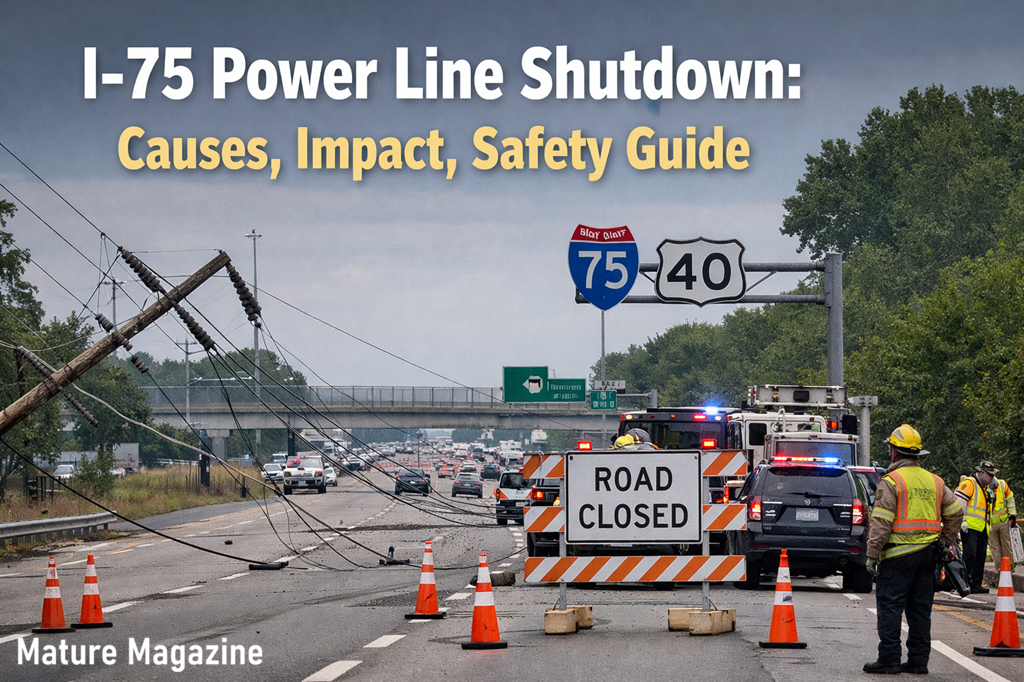
The I-75 power line shutdown refers to incidents where high-voltage power lines fall or become unsafe near Interstate 75, forcing authorities to close all or part of the highway.
One confirmed case happened on June 18, 2025, in Vandalia, Ohio, where downed power lines near US-40 shut down both directions of traffic for over an hour.
These incidents are usually caused by storms or accidents and can lead to major traffic delays, power outages, and safety risks. They show how closely power systems and highways are connected in daily life.
What Is an I-75 Power Line Shutdown?
An I-75 power line shutdown occurs when electric transmission lines near the highway create a danger and require immediate action.
These lines carry high levels of electricity across long distances. When they fall or sag, they can touch vehicles or the road surface.
To prevent serious harm, authorities stop traffic and allow trained crews to fix the issue safely.
The June 2025 Incident in Vandalia, Ohio
What Happened
On June 18, 2025, all lanes of I-75 were closed near Vandalia, Ohio.
High-voltage power lines came down near the US-40 area. Officials quickly shut down both northbound and southbound lanes to protect drivers.
The closure lasted for more than an hour while crews cleared the lines and secured the area.
Exact Location
- Between US-40 and Northwoods Boulevard
- Near Dayton, Ohio
- Along a busy section of Interstate 75
Another similar case occurred near Monroe, Ohio, where six power poles fell. This shows that such incidents can affect multiple areas along the same route.
Why Do Power Lines Fail Near Highways?
Severe Weather
Storms are the most common cause.
Strong winds can knock down poles. Heavy rain can weaken the ground. Lightning can damage electrical systems.
These conditions often lead to sudden failures.
Vehicle Collisions
Cars or trucks can crash into poles near the highway.
Even one accident can bring down several lines, blocking traffic and creating a dangerous situation.
Aging Infrastructure
Many power lines and poles are old.
Over time, materials weaken and become less reliable. When pressure increases, failure becomes more likely.
High Load and Stress
Power lines carry heavy electrical loads, especially during peak demand.
This creates heat and tension, which can make weak components fail faster.
Why Highways and Power Lines Share Space
Power lines often run alongside highways for practical reasons.
Utility companies can access them easily for maintenance. The land is already clear, which reduces cost and effort.
However, this setup also means that one problem can affect both transport and electricity at the same time.
Impact on Traffic and Travel
Full Highway Closures
When power lines fall, authorities often close all lanes.
This is necessary to prevent contact with live electricity.
Traffic Delays
I-75 is a major route used by thousands of drivers daily.
Closures can cause long lines of traffic, delays of more than an hour, and frustration for travelers.
Pressure on Nearby Roads
Traffic is often redirected to local streets.
These roads become crowded and slow, making the situation worse.
Impact on Communities
Power Outages
Nearby homes and businesses may lose electricity.
This affects daily life, especially for essential services.
Business Disruption
I-75 supports transport and delivery systems.
Shutdowns can delay shipments and reduce customer flow for local businesses.
Personal Stress
Drivers may miss work, school, or appointments.
Long delays can also increase stress and fatigue.
Safety Rules Everyone Should Know
Stay Inside Your Vehicle
If you are near downed power lines, remain inside your car.
The vehicle can offer some protection from electric current.
Keep a Safe Distance
Stay at least 30 feet away from any fallen wires.
Electricity can travel through the ground and nearby metal.
Do Not Touch Anything
Avoid touching wires, poles, or objects near them.
Even if they look safe, they may still carry power.
Follow Official Guidance
Listen to traffic updates and follow detours.
Emergency teams are trained to guide you safely.
How Emergency Teams Handle the Situation
Immediate Response
- Close the highway
- Secure the area
- Contact utility companies
Repair Process
- Turn off electricity
- Remove damaged lines
- Replace broken parts
Final Safety Checks
- Inspect the area carefully
- Confirm no electrical risk remains
- Reopen the road once safe
How Long Do These Shutdowns Last?
The time depends on the level of damage.
| Situation | Typical Duration |
|---|---|
| Minor issue | 1 to 2 hours |
| Moderate damage | 3 to 6 hours |
| Major failure | Several hours to a full day |
The Vandalia case lasted just over an hour, which is relatively short for such incidents.
What This Reveals About Infrastructure
Strong Connection Between Systems
Power and transport systems are closely linked.
A single failure can affect both at once.
Need for Upgrades
Many systems are aging and need improvement.
Better materials and design can reduce risk.
Weather Challenges
Storms are becoming stronger in many areas.
Infrastructure must adapt to handle these changes.
How Future Incidents Can Be Reduced
Upgrade Old Equipment
Replace weak poles and aging lines.
Use stronger, weather-resistant materials.
Use Smart Monitoring
Install sensors to detect early problems.
This helps crews act before failure occurs.
Improve Coordination
Better planning between utility and transport agencies can speed up response time.
Consider Underground Lines
Burying power lines can reduce weather damage in some areas.
However, this is costly and not always possible.
Conclusion
The I-75 power line shutdown is more than a traffic problem. It is a clear example of how connected our modern systems are.
The June 2025 incident in Vandalia, Ohio showed how quickly a single failure can disrupt travel, power, and daily life.
At the same time, it showed the importance of fast response and clear safety measures.
Looking ahead, stronger infrastructure and better planning will help reduce these risks. More importantly, they will protect people and keep critical highways like I-75 safe and reliable for everyone.